
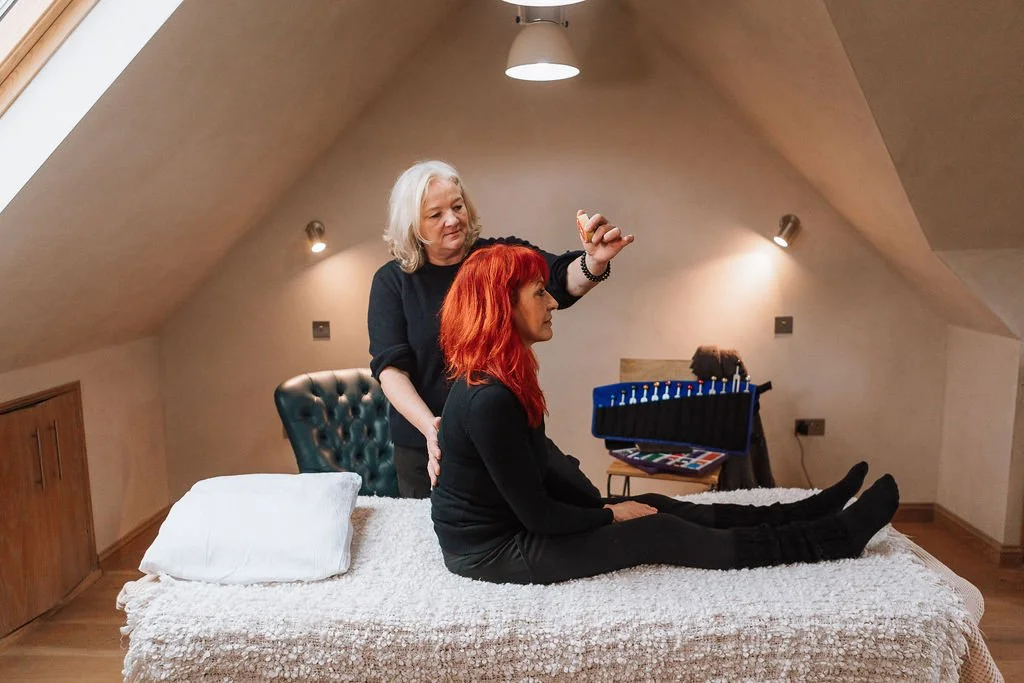
Kinesiology session for menopause support.
This post is part of my ongoing work supporting women through hormonal transitions - see also Kinesiology Sessions and my Five Element: Read your Body: Restore your Energy programme.
I remember sitting with a client last year who said something that’s stayed with me: “I feel like my body has changed the rules halfway through the game, and nobody gave me the new rulebook.” Menopause can feel exactly like that and I understand it not just as a practitioner, but personally. Kinesiology was a game changer for me and has been one of the things that helped me navigate my own menopause with far more ease than I expected.
Second Spring: a different way to see this stage
In Chinese Medicine menopause isn’t framed as a decline, it’s called the Second Spring. The reproductive energy that once poured outward, cycle after cycle, into fertility and giving, now turns inward. It becomes available to you, for the first time in decades, as wisdom, clarity, creativity and personal power rather than something spent on others. Many traditions see this transition as a genuine gateway, not the end of vitality, but the start of a different, often stronger kind of it. That reframe matters, because how we interpret a symptom changes how we respond to it. A hot flush read as “my body failing me” feels very different from a hot flush read as “energy moving, asking to be redirected.” Kinesiology sits naturally alongside this view, it isn’t trying to suppress what your body is doing, it’s trying to understand it.
Dr Christiane Northrup, whose work on menopause has been a real touchstone for me, describes this stage as one of life’s great invitations to authenticity. As reproductive hormones shift, many women find they can no longer quietly tolerate relationships, jobs, or habits that have been draining them for years. The questions what do I actually want? and where have I been giving my energy away? tend to surface, often for the first time in decades. Seen this way, menopause isn’t a crisis to survive. It’s an opening. Symptoms as messages, not malfunctions. I’m often asked, “how do I stop the hot flushes / the brain fog / the insomnia?”, completely understandably, but I’ve found it far more useful to ask a different question alongside it: what is my body trying to tell me?
Symptoms aren’t the enemy here; they’re communication.
That’s almost exactly what muscle testing is built for, it gives us a way to ask the body questions the conscious mind can’t always answer, and to listen for what it’s been trying to say.
Why menopause is so hard to treat “generically”
No two women move through menopause the same way. One woman’s hormonal shifts show up as brain fog and sleeplessness; another’s as joint pain, anxiety, or sudden food intolerances she never had before. Conventional approaches often reach for one-size-fits-all solutions — HRT, antidepressants, generic supplements — when what’s actually needed is something far more individual. This is where Kinesiology for menopause support excels . Through muscle testing, I’m not guessing which hormone, mineral, or emotional pattern is out of balance for you, your body tells me, directly, in that session.
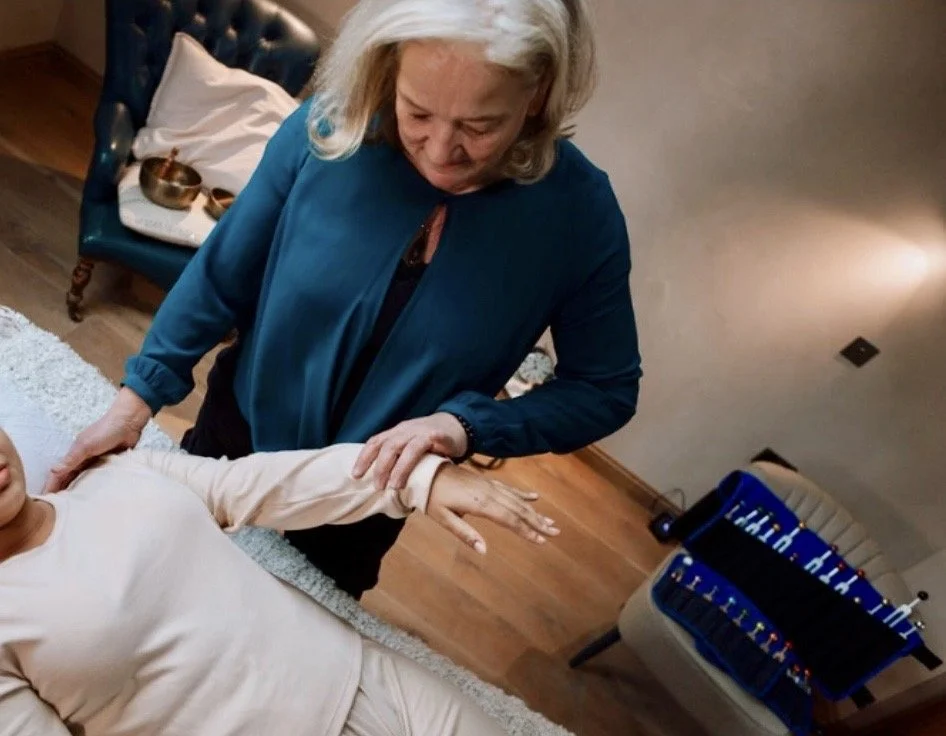
What a session might uncover
Every menopause-related session is different, but here’s the kind of thing muscle testing often reveals: • Nutritional gaps: many women are low in specific minerals (magnesium, B vitamins, zinc are common deficiencies) that directly affect hormone regulation, sleep, and mood, but blood tests don’t always catch what your body is actually short of right now •
Adrenal and energy imbalances, menopause places real demand on the adrenal glands and when they’re depleted, symptoms like fatigue and anxiety intensify• Dr Christiane Northrup also highlights how years of putting everyone else first can leave women depleted by the time menopause arrives. The hormonal transition isn’t happening in isolation, it’s taking place in a body that’s often been running on empty for decades.
Emotional undercurrents: grief, identity shifts, unspoken anger, or old unprocessed emotion often surface strongly during this life stage and the body holds onto it until it’s addressed. Many women are surprised when things they thought were long settled resurface now . I think of this less as going backwards and more as emotional house-cleaning: old patterns finally ready to be let go •
Structural and energetic patterns : joint pain and stiffness that seem to arrive “out of nowhere” often have an energetic or structural root that bodywork can shift.
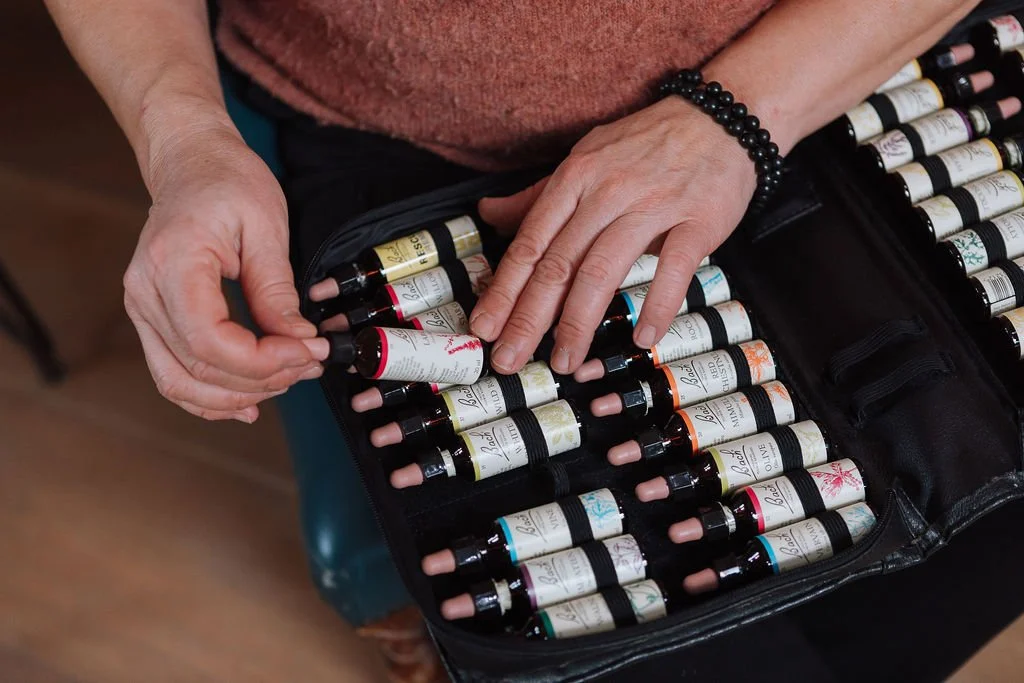
From there, we build a plan specific to you, which might include targeted supplementation, Bach flower remedies, acupressure, tuning fork work on relevant meridians, or emotional release techniques like EFT.
Why it’s rarely “just hormones”
One of the things I see again and again in clinic is how much everyday load - poor sleep, ultra-processed food, environmental toxins from household products and cosmetics and constant low-grade stress — adds up to a body that simply doesn’t have the spare capacity to manage a major hormonal transition gracefully. So often, this transition arrives in a body that’s been running on empty for years, quietly depleted by decades of putting everyone else first. Menopause doesn’t happen in isolation; it happens on top of whatever else your system is already carrying. While HRT can be genuinely transformative for many women, others continue to experience symptoms despite treatment, or find they need extra support with nutrition, stress, sleep, or emotional wellbeing alongside it.
Kinesiology isn’t a replacement for medical care, it’s an individualised way of exploring the other factors that may be shaping how you feel, many of which don’t show up clearly on a standard blood panel. Blood sugar swings are another quiet driver. Big spikes and crashes push cortisol up and persistently high cortisol steals from your body’s progesterone supply, precisely the hormone menopausal women most need to conserve. This is one reason food sensitivity testing is such a core part of kinesiology work during this stage: eating something your body doesn’t tolerate well raises cortisol just as much as a stressful day at work does and it happens meal after meal, invisibly. The change in hormones also effects the gut microbiome and is many women experience bloating or other digestive discomforts.

Why this stage of life deserves more than “just get through it”
I often think of menopause the way Chinese Medicine frames a change of season , not a problem to be endured, but a transition asking for support, attention, and a different kind of care than what came before.
You’re not broken. Your body’s rules have simply changed and it needs a new kind of listening. I’ve walked this path myself and I’ve watched Kinesiology help hundreds of women feel like themselves again, not by fighting the change, but by working with it. I remember one woman, Elise who literally crawled into my treatment room the first session. She was feeling so low, depressed and lethargic she could barely get off the sofa. When I saw her a month later, after taking the supplements we had identified and having balanced her energy system, she was a completly new woman, beaming smiles and bouncing into the treatment room. Sometimes, one session can work miracles, though more often a few sessions are required to bring the body back into balance.
Ready to find your own rulebook? If you’re navigating perimenopause and menopause and feel like something’s being missed, Kinesiology sessions are available in person at Knowl Hill, Midgham and Reading, or online.
I’m Fiona. My roots are in Shiatsu and Traditional Chinese Medicine, which I trained in 26 years ago. Over the years since, that’s grown into a wider practice, including Kinesiology, which I now use specifically to help women navigate transitions like this one : listening to what your body is actually asking for, rather than just managing symptoms in isolation. Menopause isn’t a problem to fix; it’s an invitation to recalibrate and step into your power and I’ve walked alongside many women doing precisely that.
Book a free 15-minute consultation and let’s find out what your body’s been trying to tell you.
And if you want to go deeper into understanding what your body is communicating, join my online Read your Body: Restore your Energy Five Element self-care programme which starts 8 October 2026 and runs for 6 weeks.
Further reading, check out Dr Chrisitane Northrup’s excellent book The Wisdom of Menopause.